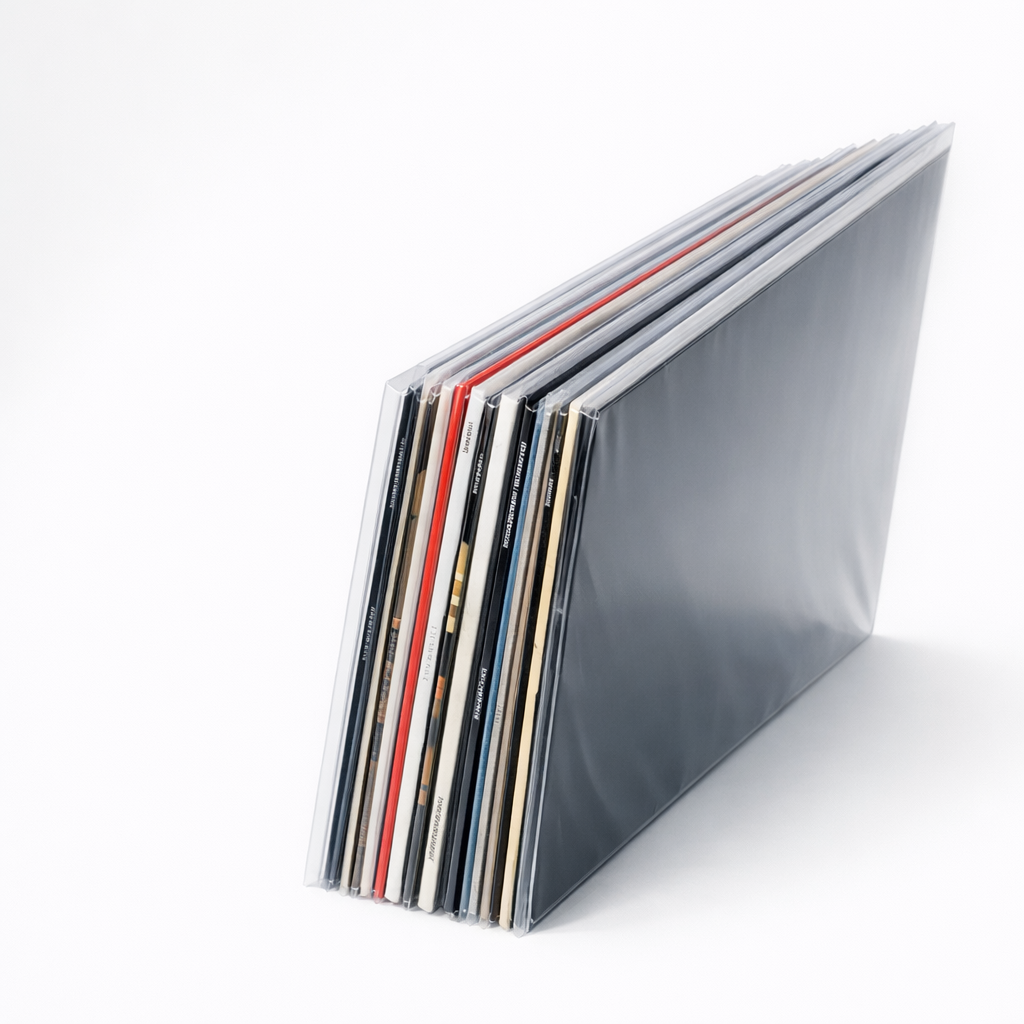
Let me break down exactly what happens when a record goes into the wrong sleeve: microscopic dust and skin oils stay trapped against the groove, static attracts fine particles that raise the noise floor, and over months the jacket and label can suffer from plasticizer migration or warping. Those are measurable effects. You can hear them as added crackle, diminished low end, and a loss of dynamic range.
In my experience, storing vinyl is less about ritual and more about controlling a few physical variables: contact, contamination, and climate. Think of a record as an analog memory device. The grooves store signal energy down to a few tens of Hertz and up into several kilohertz, and anything that alters the surface or seating geometry will change the playback. Little problems add up. A 180 gram pressing does not excuse poor storage.
Why sleeve choice matters
From an engineering standpoint, sleeves are part of the signal path, just downstream of the cartridge. They do not change frequency response directly, but they control the environment around the groove. That affects static charge, particulate loading, and the micro-scratches that raise surface noise. Objectively speaking, a properly chosen inner sleeve reduces static buildup and prevents repeated abrasions that shave off high-frequency energy and lower perceived clarity.
Here are the key failure modes I see in the lab and studio:
- Warping from stacking or heat. Warps change the effective tracking angle and reduce low-frequency output.
- PVC contamination from cheap sleeves. Plasticizer migration causes sticky residue on jackets and labels, and in extreme cases stiffness changes that can deform the record.
- Trapped moisture or dirt. This leads to mold growth at higher humidity and audible crackle from particles in the groove.
Inner sleeves: materials and recommendations
Inner sleeves are the record's first line of defense. The technical reality is surprisingly simple: use anti-static, archival-safe plastics or acid-free paper if you must. My short list of choices, in order of preference for everyday and archival use, is polypropylene (PP), high-density polyethylene (HDPE), and specially treated rice paper or paper-lined sleeves that are acid-free.
Why PP and HDPE? They are inert, do not contain plasticizers that migrate, and are available in anti-static finishes. Polypropylene has the edge because it is more dimensionally stable and less likely to pick up static. HDPE is also fine and is common in higher-end archival sleeves. Avoid plain acidic paper inner sleeves sold with many budget records; they can yellow and create micro-abrasives.
A few practical notes:
- Choose inner sleeves sized to the record: 12 inch LPs (33 1/3 rpm) in 12 inch sleeves, 7 inch singles (typically 45 rpm) in 7 inch sleeves, 10 inch discs (often 78 rpm or 45 rpm) in 10 inch sleeves. Matching size prevents folding and pressure points.
- Look for anti-static treated PP sleeves from reputable suppliers. Brands vary, but look for clear specification sheets that say "acid-free" and "anti-static."
- If you want the quietest results for archival storage, use high-quality HDPE or polyethylene sleeves that explicitly say they are archival safe.
Outer sleeves and jackets: protecting the art and spine
Outer sleeves protect the jacket from dust, shelf wear, and humidity. Here the material of choice is usually polyethylene or polypropylene again. The important details are thickness and fit. A typical protective outer sleeve is around 2 mil thickness and includes a flap to seal the top; that prevents dust ingress while still allowing the jacket to breathe enough to avoid trapping moisture.
Use outer sleeves for any collector copy, limited edition, or custom pressing. When Vinylacy ships a NOIR or PRISM pressing with a custom jacket, I recommend slipping the jacket into a clear polyethylene outer sleeve immediately on arrival. It keeps scuffs down and protects printed inks from rubbing.
For transport, use a rigid mailer or put the sleeved jacket into a book-style mailer. For long term storage, a breathable outer sleeve that is archival-grade is best. Avoid laminated or sealed PVC sleeves. PVC off-gasses plasticizers that migrate into paper and vinyl.
Handling and cleaning before sleeving: a step by step process
Here's where it gets interesting. The single most common cause of damage is putting a dirty or wet record into a sleeve. That traps contaminants and accelerates wear. Follow these steps every time you sleeve a record.
- Wash your hands and handle by the edge and label area only. Avoid touching the playing surface; oils transfer quickly.
- Dry dust removal. Use a carbon-fiber brush such as the Tonar anti-static brush or a high-quality carbon-fiber wand to remove loose dust. I keep one near every playback rig.
- For heavier dirt, do a wet clean. Machines like a VPI HW-16 or ultrasonic cleaners (e.g., KLAudio, Flex-a-Rack) with an appropriate vinyl cleaning solution remove oils and embedded particles. Manual methods using a microfiber pad and distilled water with a tiny amount of isopropyl or a commercial solution work if you know the technique.
- Allow the record to dry completely in a clean, dust-free area before sleeving. Leaving moisture in accelerates mold and label bleed.
- Use anti-static inner sleeves. Slide the clean, dry record gently into the sleeve, supporting the label and edge to avoid flexing the vinyl.
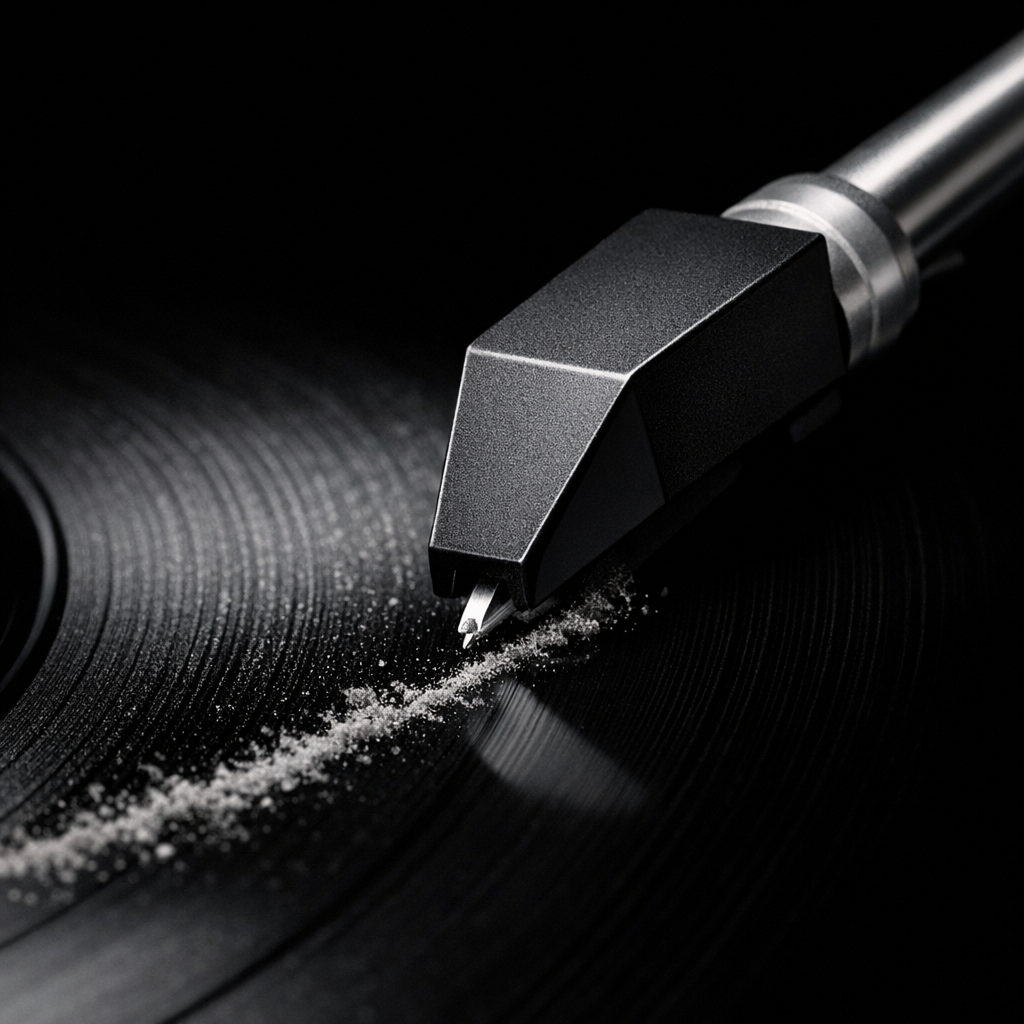
In the studio, I often measure noise floor before and after cleaning on an Audio Precision APx system. Proper wet cleaning can improve signal-to-noise ratio by several decibels on heavily soiled pressings. Yes, you can quantify the benefit.
Shelving, environment and long term storage
Store records vertically, spine-up like books. This keeps the record flat in its sleeve and distributes weight evenly. Laying them flat or stacking is an invitation to warps and sleeve pressure marks.
Environmental numbers to remember:
- Relative humidity: 35 to 50 percent RH. This range keeps paper and vinyl stable and reduces mold risk.
- Temperature: about 18 to 21 degrees Celsius (65 to 70 degrees Fahrenheit). Avoid sustained exposure above 30 degrees Celsius (86 degrees Fahrenheit) which increases warp risk.
When shelving, do not pack records so tightly that removing one bends the neighbors. Use bookends or dividers to keep an upright support without leaning too much. A slight lean is okay, but a noticeable tilt puts stress on the edge and sleeve. If you need to move or ship records, box them upright in an archive box with dividers and secure them so they do not shift.
For true long-term storage, place sleeved records in archival boxes made for long-term holds and keep them in a controlled environment. Avoid attics, basements, and cars. I once retrieved a box of studio masters from a basement that had 20 percent RH fluctuation day to day. Several jackets had surface mold and the labels were tacky. That cost me time and a heartbreak release candidate.
Common mistakes and a quick checklist
After testing dozens of storage configurations and doing restoration work on everything from 1950s acetates to modern 180 gram reissues, I see the same mistakes over and over. Here is a short checklist to run through when you sleeve a new record or curate a collection.
- Are you using matching size sleeves? 12 inch for 12 inch LPs, 7 inch for 7 inch singles, 10 inch for 10 inch discs.
- Is the inner sleeve anti-static and archival-safe? Avoid PVC and standard acidic paper.
- Is the record clean and completely dry before you sleeve it?
- Are jackets protected with an outer polyethylene or polypropylene sleeve?
- Is your shelf environment stable around 18 to 21 C and 35 to 50 percent RH?
- Are records stored vertically and not packed so tightly that removal bends the edges?

Short glossary
- Inner sleeve: protective sleeve directly around the record (materials: PP, PE, paper-lined).
- Outer sleeve: clear protective cover for the album jacket (usually polyethylene).
- Anti-static: property/material that reduces static charge attracting dust to the groove.
- PVC: polyvinyl chloride. Avoid for sleeves due to plasticizer migration and acidity.
- Archival-safe: materials that are acid-free, non-reactive and formulated for long-term preservation.
Special considerations for custom and colored pressings
Custom pressings like those from Vinylacy with NOIR, CRYSTAL, HAZE, or PRISM finishes are beautiful and often are part of a limited run. These can include colored vinyl and specialty inks on the jacket that require care. Colored vinyl is not inherently more fragile, but it does sometimes show surface dust more clearly. Protect the artwork with an outer sleeve and store the record upright in an anti-static inner sleeve.
If you are gifting a custom vinyl, package it in a clear outer sleeve and include a small care card with cleaning instructions. Buyers appreciate a simple note: "Use a carbon-fiber brush before play, keep at 35 to 50 percent RH." Practical, and it reduces returns.
When I worked at Sonic Arts Studio, we would sleeve final pressings immediately in anti-static inner sleeves and polyethylene outer sleeves before filing them in our archive. It saved projects and client relations more than once when a heat wave threatened a shipment.
Final practical advice and key measurements
Storage is about controlled contact and a predictable environment. Use anti-static polypropylene inner sleeves, polyethylene or polypropylene outer sleeves for jackets, and store everything vertically. Clean before you sleeve. Avoid PVC. Keep your storage environment at about 18 to 21 C and 35 to 50 percent RH.
If you want a rule to memorize: 35 to 50 percent RH and 18 to 21 degrees Celsius. Get those two numbers right and you avoid most long-term problems. For everyday play, an anti-static PP inner sleeve plus a quick carbon-fiber brush before spin will keep your signal-to-noise ratio healthy and your music sounding as intended.
One last thing from experience: invest in a good cleaning rig and a few dozen quality inner sleeves. The cost per record is small compared with the audible and archival benefits. Your collection will thank you, and the music will remain honest for decades.