
To understand why a record is rare today, we need to look back at how records were made and marketed. The story of rarity begins not with the music but with decisions on pressing quantity, mastering, and distribution. Archival records show that a single change in stamper numbering or a last‑minute sleeve swap could create a collector's holy grail decades later.
As someone who wrote a dissertation on vinyl manufacturing after World War II and who spends far too much time squinting at runouts in dim record‑store basements, I want to make identifying rare vinyl practical and enjoyable. Below you will find clear, actionable steps, concrete examples, and a short glossary so you can separate genuine scarcity from clever marketing or modern reissues.
Start with the basics: size, speed, and country of origin
Begin by checking the obvious details. Size and speed tell you a lot about likely pressing runs and demand. A 12 inch LP at 33 1/3 rpm is the standard album format; 7 inch singles at 45 rpm and 10 inch records have historically had smaller runs and can be rarer for some releases. For pre‑1950s material you may encounter 78 rpm shellac discs, which are a different market entirely.
Country of manufacture matters. US, UK, and Japan pressings often differ in mastering, label artwork, and pressing quality. Japanese pressings from the 1960s and 1970s, frequently issued with an obi strip and deep mastering, can command a premium. Comparatively speaking, a UK first pressing might have a different matrix etching or label variant than a US issue, and collectors value those differences.
Read the runout: matrix etchings and what they tell you
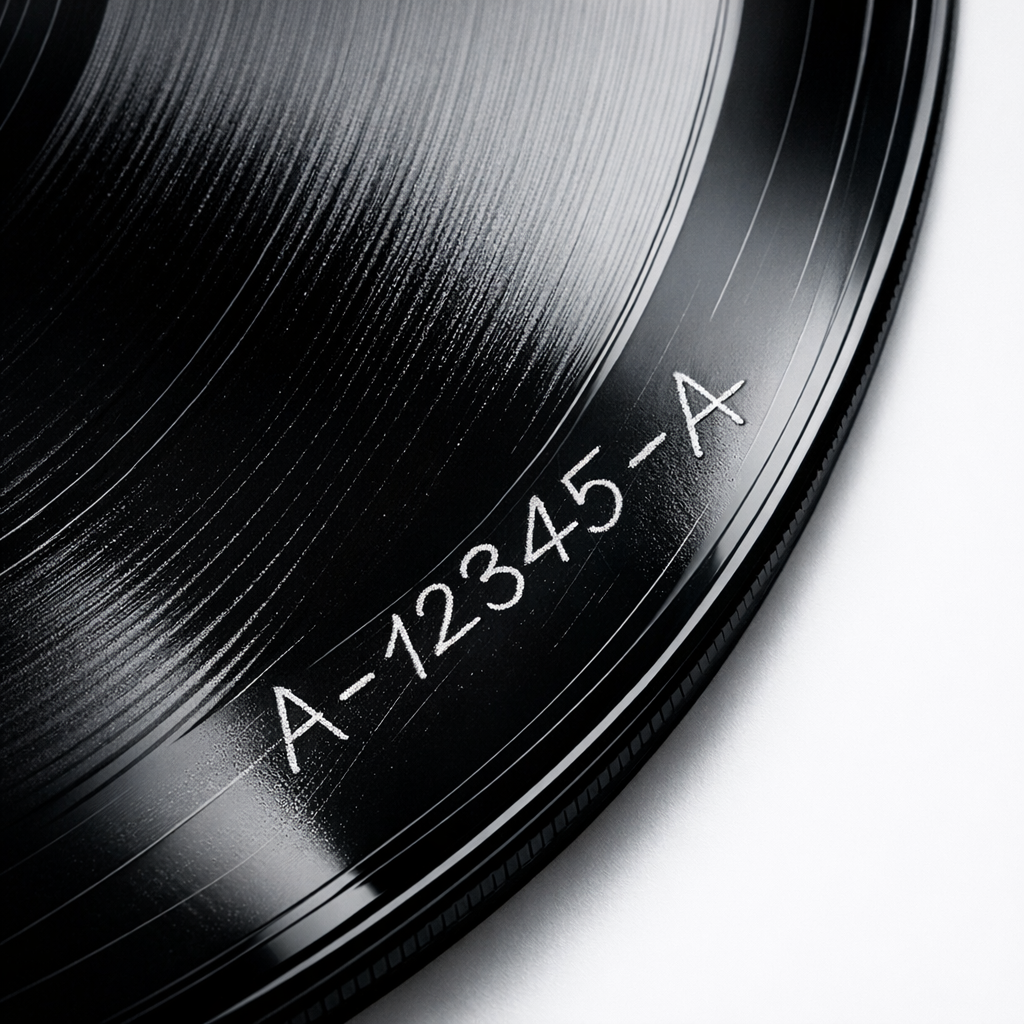
The runout, or dead‑wax, is the smooth zone near the label where the pressing plant etched matrix numbers and other marks. These etchings name the stamper, record the mastering engineer, and sometimes indicate pressing order. A classic example is the presence of George Peckham's famed signature etching "PORKY" on many UK records of the 1970s and 1980s. That tells you who mastered it and often narrows the pressing date.
How to read them practically
- Use a magnifier or smartphone macro lens and a flashlight to photograph the runout.
- Look for side identifiers like A or B, matrix numbers (for example, A1 B1 or a catalog number plus suffix), and mastering initials.
- Note any hand‑etchings, symbols, or dates. Hand‑etched markings often indicate small runs, test pressings, or later tweaks.
Why runouts matter
Runout marks can indicate a first pressing, especially when you see original stamper IDs or mastering initials consistent with the era. Archive documentation for major labels often shows that the first stamper matrix was A‑1 or A‑1‑A in the 1960s, with subsequent pressings moving to A‑2 or A‑3. Test pressings typically number 1 to 5 copies, though some independents produced up to 10. If you find a test pressing number or a clear hand‑stamped note like "TP" or "Test", you are likely looking at an extreme rarity.
Inspect labels, sleeves, and manufacturing clues
Label variants, sleeve printing, and small packaging details are invaluable. Industry documentation and label catalogs show that small typographic changes, logo redesigns, or the appearance of a barcode can date pressings within a narrow window.
- Label variants. Compare logo style, typography, and catalog numbers to known first pressing images. Discogs is a useful reference for label images, but always verify with runout numbers.
- Sleeve details. A missing barcode typically signals a pre‑late 1970s pressing. Inner sleeve type matters too: printed company sleeves or heavy stock inner sleeves were common in certain years and can indicate authenticity.
- Shrinkwrap seams. Shrinkwrap manufacturing changed over time. The presence and orientation of seams, or the use of a single seam versus a three‑fold wrap, can help date a copy.
- Test pressings and promo copies. Test pressings often come in plain sleeves with hand‑written notes and stamps. Promo copies usually have "Not For Sale" or promotional wording and were produced in limited numbers, making them attractive to collectors.
Case study: the Sex Pistols 7 inch issued and quickly withdrawn on A&M in 1977 is a well documented rarity. Some copies were pressed and distributed before the label pulled the release, producing a handful of original A&M copies that command high prices today. Archival press statements and catalog records confirm the withdrawal, which helps authenticate those rare copies.
Weigh the myths: vinyl weight, color, and manufacturing variants
There are common misconceptions that lead collectors astray. The most persistent is weight or color equals rarity.
- Weight. Typical modern pressings are around 140 to 160 grams. Many reissues are promoted as 180 gram audiophile pressings. Industry documentation and manufacturing records show that 180 g is primarily a quality and marketing choice for reissues and is not a reliable indicator of an original pressing. In short, 180 g often signals a reissue.
- Color and picture discs. Colored vinyl, splatter editions, and picture discs can be collectible, but they were often produced as limited editions in recent decades and are not automatically scarcer than black original pressings from the 1960s or 1970s. For example, a modern numbered color repress of a classic album may exist in the thousands, while an original black vinyl first pressing might number only a few hundred.
- Mispressings and misprints. These genuinely rare items include sleeve misprints, runout mis‑codes, and matrix mismatches. Such anomalies can increase value substantially, but provenance is crucial to avoid fakes.
Unique audio variants: mono vs stereo, alternate takes, and mastering differences
Audio differences often determine collector interest. In the 1960s, many albums were available in both mono and stereo versions, and the mono mixes were sometimes the artist or producer's preferred version. Brian Wilson's Pet Sounds, issued in 1966 on Capitol, exists in mono and stereo; mono first pressings and certain mono mixes are highly sought after because they reflect the original artistic intent.
Other valuable audio variants include alternate takes, unlisted bonus tracks, or unique mastering choices. Research indicates that pressing plants sometimes used different lacquers for promotional runs, and those lacquers can yield audible differences. Always spot those by comparing runouts and, if possible, by listening to suspicious copies on quality equipment.
How to verify identity and estimate value: tools and a practical checklist
Collectors rely on a mix of databases, auction records, and physical inspection. Discogs and Popsike are indispensable. Discogs allows side‑by‑side runout comparisons and images, while Popsike archives auction results and gives a sense of realized prices rather than asking prices.
Practical verification checklist
- Photograph the runout for both sides and compare to known first pressing images on Discogs.
- Verify label variant and sleeve printing against label catalogs and contemporary advertisements if available.
- Check for promotional stamps, test pressing marks, and hand‑written notes indicating provenance.
- Use Popsike to find realized auction prices for the exact pressing and condition. Do not rely solely on listing prices.
- Confirm country of manufacture. Japanese or UK originals may have different catalog numbers or matrix codes.
- Grade the condition. Near mint or mint copies are always worth substantially more than VG or VG+. Condition grading drives value more than color or weight in most cases.
Remember that many apparent first pressings are actually early represses that faithfully reproduce original labels and sleeves. Runout etchings and stamper IDs are your best defense against misidentification.
Short glossary
- Runout (dead‑wax): the smooth area near the label with etched matrix numbers and marks.
- Test pressing: a pre‑production copy, usually 1 to 5 copies, produced to check audio quality.
- First pressing: the initial manufacturing run using the original stamper or lacquers.
- Reissue: a later pressing intended to replicate an album; may differ in weight, mastering, or artwork.
- Stamper: the metal plate used to press vinyl; its ID often appears in the matrix etchings.

Preservation, provenance, and how custom pressings fit in
Condition matters more than you think. Archival standards used by libraries and collectors recommend storing records vertically, in anti‑static inner sleeves, and away from heat. A near‑mint original in a proper archival sleeve will outsell a worn copy even if the latter is a rarer variant.
For artists, gift‑givers, or anyone considering a special vinyl run, custom pressing is an appealing option. Companies like Vinylacy produce high quality custom vinyl in France, offering NOIR, CRYSTAL, HAZE, and PRISM finishes and starting prices around 35€. These are new pressings and provide a way to own a unique color or packaging without confusing collectors about provenance. If your goal is a collectible that is clearly a contemporary limited edition, custom runs are ideal. If you are seeking original, historically scarce pressings, focus on runout etchings, label variants, and documented manufacturing history.
Significantly, many modern collectors appreciate clear provenance. A well documented custom pressing with a certificate of authenticity from a respected press can be a meaningful gift and a future collectible in its own right.
Finally, practical buying tips for collectors and gift‑givers
- Buy in person when possible. Inspect runouts and sleeves and listen if the seller allows.
- Ask for provenance: invoices, promotional material, or label correspondence strengthen a claim to rarity.
- For online buys, request detailed photos of runouts and the inner sleeve, and confirm shipping and return policies.
- If you're commissioning custom vinyl, consider clear labeling that indicates the pressing date and edition number to avoid future misattribution.
Historical context reveals that what counts as rare has always been shaped by manufacturing choices and distribution quirks. A hand‑etched mark in the dead‑wax, a withdrawn label from 1977, or a mono mix from 1966 can transform a run‑of‑the‑mill album into a sought after piece of music history. Use the tools and checklist above, trust primary evidence like runouts and label variants, and remember that condition and provenance are your strongest allies.
Whether you are hunting for an archival gem or commissioning a memorable custom pressing from Vinylacy as a gift, a little knowledge goes a long way. Archival evidence shows you where to look, and hands‑on inspection tells you what you have in your hands. Happy hunting.